Build the pot and braise
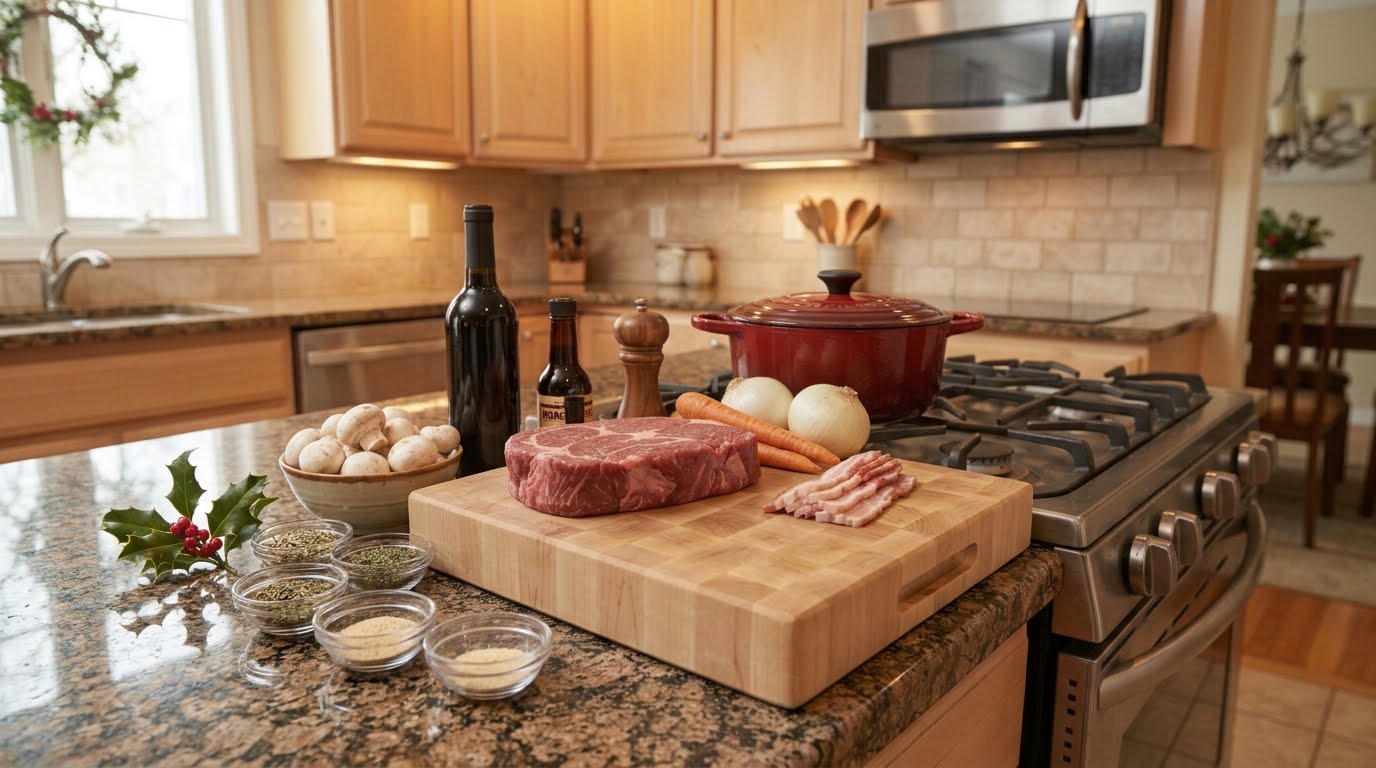
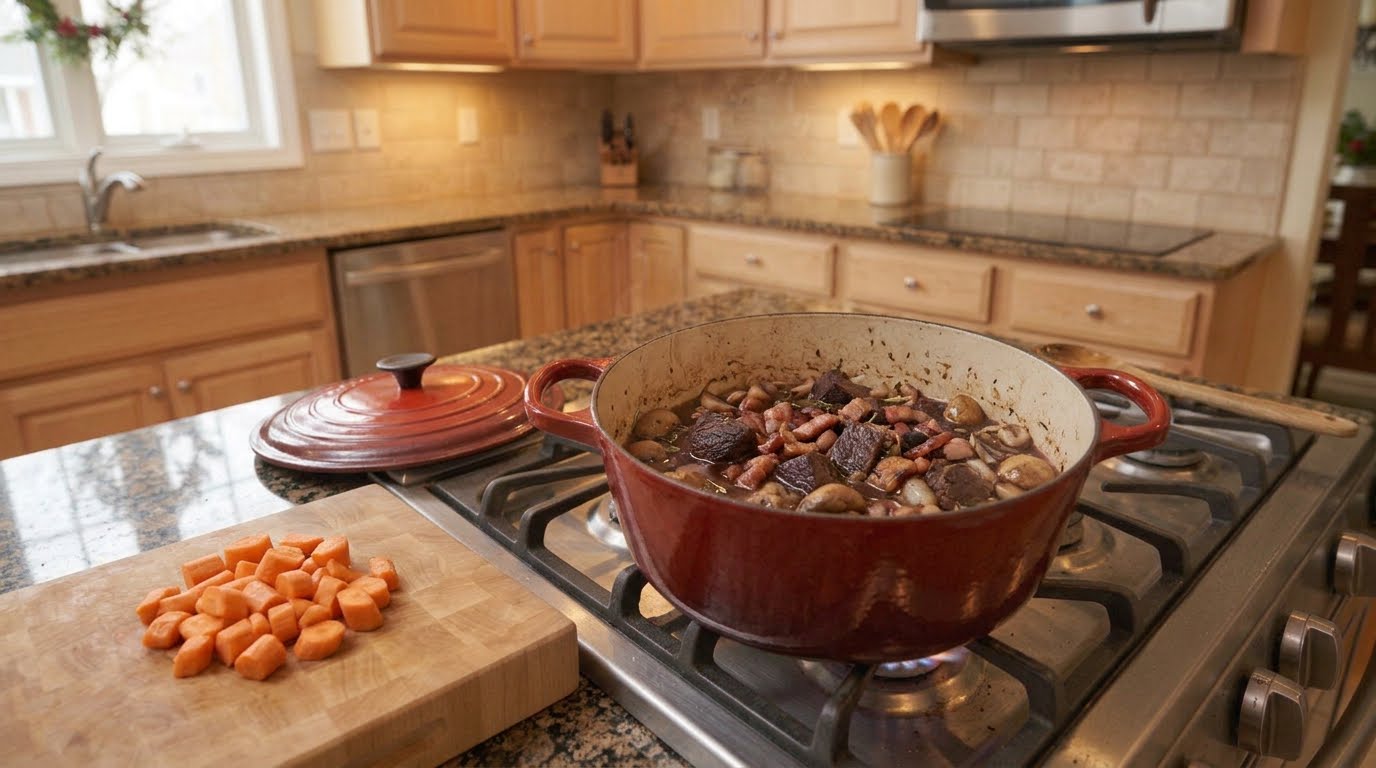
Add the broth, Worcestershire, Maggi, rosemary, thyme, sage, garlic powder, onion powder and the rest of the pepper. Return the beef with its juices, the bacon and the mushrooms.
The liquid should come just to the top of the meat without covering it. Bring it to a simmer on the stove, cover, and move the pot to a rack in the lower third of the 325°F oven.
If your lid doesn't fit snugly, lay a sheet of foil over the pot and press the lid down on top of it so less steam escapes. Take the foil off when you set the lid ajar at the end.
For a roast this size, use a 7-quart or larger Dutch oven, or split everything between two pots, so the liquid still comes just to the top of the meat.
After about 1 1/2 hours, stir in the carrots. Start checking the beef at 2 1/2 hours. It's done when a cube shreds with gentle pressure from a fork, usually by 3 hours.
Each time you check the beef, give the pot a stir so nothing catches on the bottom, and check the liquid too. The lid keeps most of it in, but over a long braise some cooks off. If it has dropped below about halfway up the meat, add hot broth from the extra you set aside until it's back to the top of the meat.
The pot should barely simmer. If it's bubbling hard when you lift the lid, turn the oven down to 300°F. A hard boil makes the meat tough and dry however long it cooks.
If a cube is still firm or chewy, it isn't done. The connective tissue hasn't melted yet, so give it another 20 to 30 minutes and check again. Don't turn the heat up to hurry it.
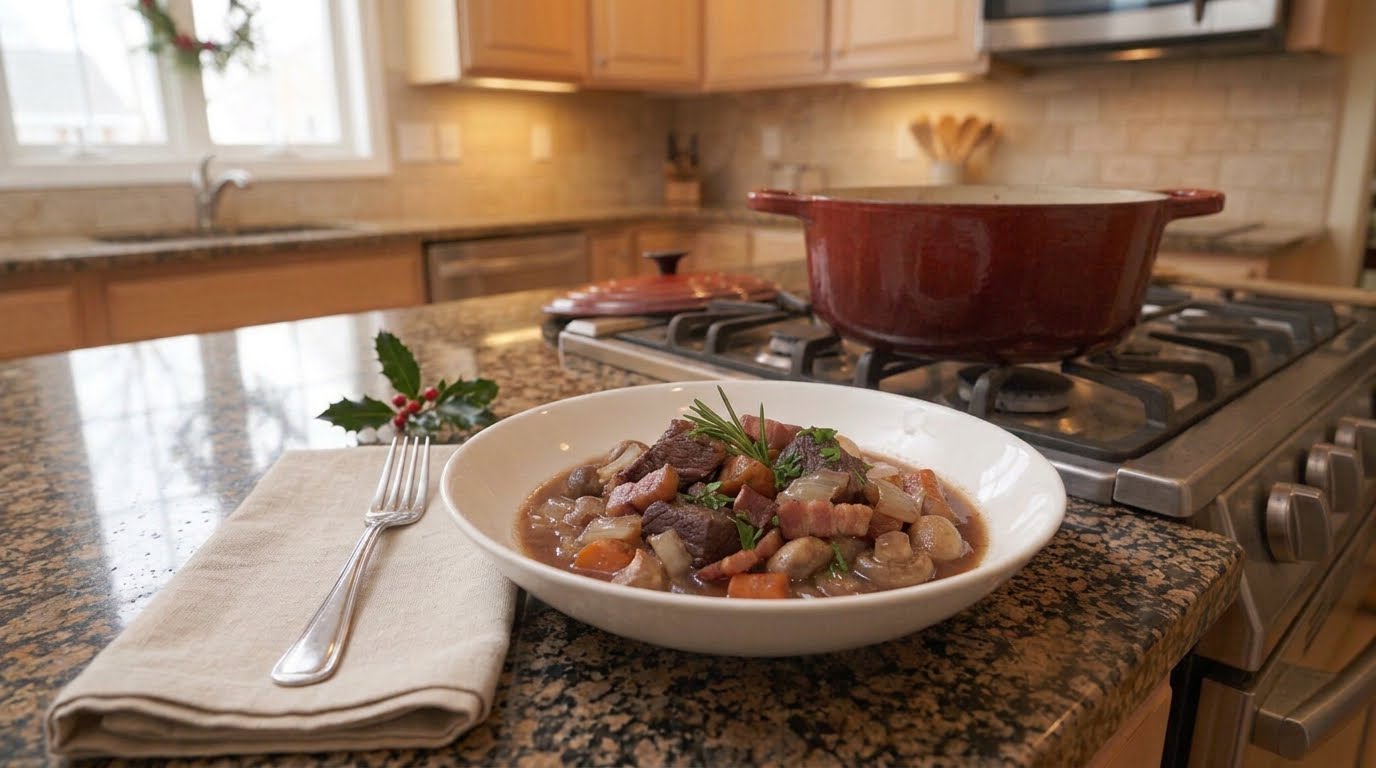
When the beef is tender, look at the gravy. If it already coats a spoon, it's done. If it's thin, set the lid ajar for 20 to 30 minutes so it reduces. This is the part that needs some babysitting. The liquid drops faster with the lid open, so check every 10 minutes, give it a stir, and take the pot out once the gravy coats a spoon, before it gets too thick.
 Recipe by